

The Truth About Zillow Home Values in Chattanooga
If you've ever searched for a home online, you've probably seen the estimated home value on Zillow—often called a Zestimate. Many homeowners in Chattanooga check this number regularly and wonder: Is it actually accurate?
The truth is, Zillow home values can be helpful, but they're not the final word on what a home is really worth. Understanding how these estimates work can help buyers and sellers make better decisions in the local market.
If you're curious about where to get started, just schedule a call so we can point you in the right direction!
Schedule a Call
What Zillow Home Values Actually Are
A Zestimate is an automated estimate of a home's market value generated by Zillow's algorithm. It analyzes hundreds of data points, including public records and tax assessments, previous home sales, comparable homes nearby, property details like square footage and number of bedrooms, and market trends and listing information. These values are calculated using machine learning models that analyze large amounts of housing data across the country.
Zillow publishes Zestimates for over 100 million homes in the United States, updating them several times per week as new information becomes available.
How Accurate Are Zillow Estimates?
Zillow reports that its estimates for homes currently on the market have a median error rate of about 1.8%, while off-market homes have an error rate closer to 7% nationwide. That may sound small, but even a 5% difference can mean tens of thousands of dollars depending on the price of the home. Because of this, most real estate professionals consider a Zestimate a starting point—not a definitive valuation.
If you're curious about where to get started, just schedule a call so we can point you in the right direction!
Schedule a CallWhy Zillow Values Can Be Off in Chattanooga
In a market like Chattanooga, automated estimates can sometimes miss important details. Here are a few reasons why.
1. Unique Homes
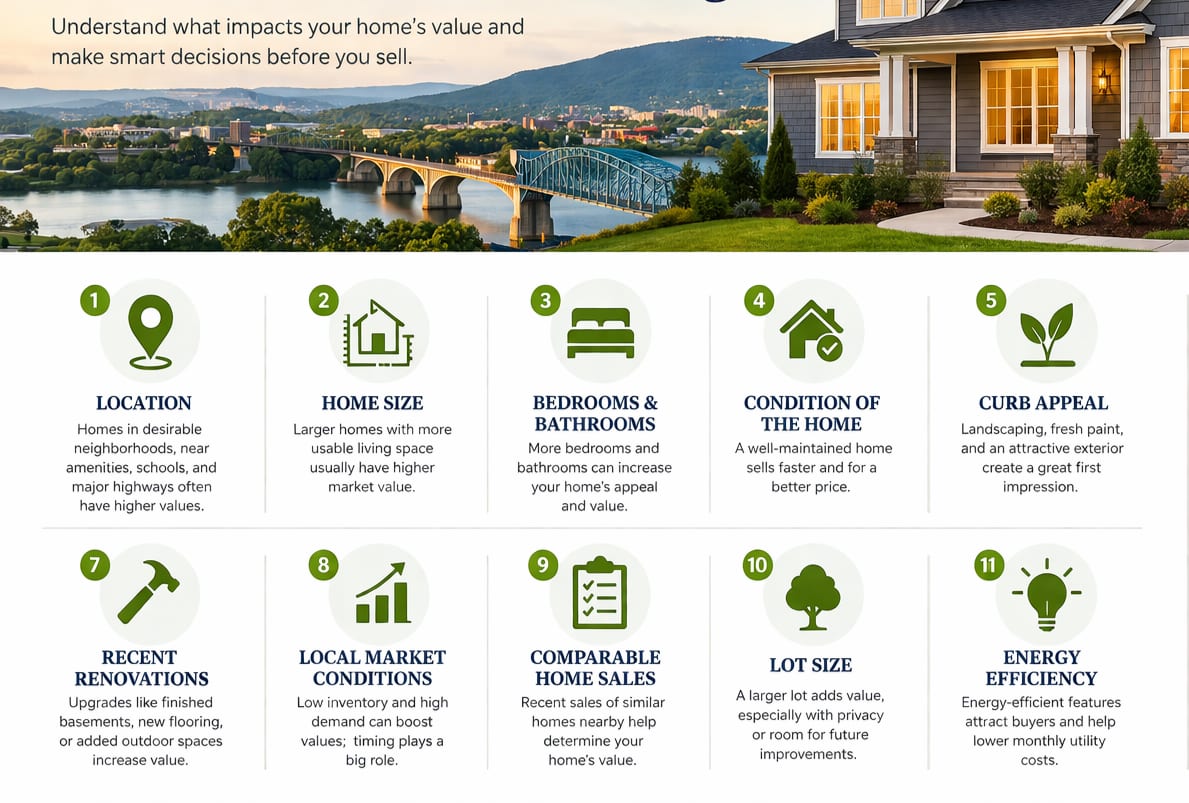
Many Chattanooga neighborhoods—such as historic districts or older communities—have homes that vary widely in design, size, and age. Automated models work best when homes are similar, so unique properties can confuse the algorithm.
2. Renovations That Aren't Recorded
If you remodeled your kitchen, added a bathroom, or upgraded finishes but those changes aren't in public records, Zillow may not know about them.
3. Neighborhood Differences
Algorithms can't fully account for factors like school zones, scenic views, street traffic, and walkability. These local factors often influence what buyers are willing to pay.
4. Rapid Market Changes
When the market shifts quickly, online estimates can lag behind real buyer demand and recent sales.
The Bottom Line
Zillow home values are useful for getting a general idea of your home's value, but they should never be the only number you rely on when buying or selling. In a dynamic market like Chattanooga, local expertise and real market data often provide a far more accurate picture than an algorithm alone.

Ready to Make Your Next Move?
Connect with Choice Homes for a clear plan whether you are buying, selling, or exploring communities across Tennessee and Georgia.