
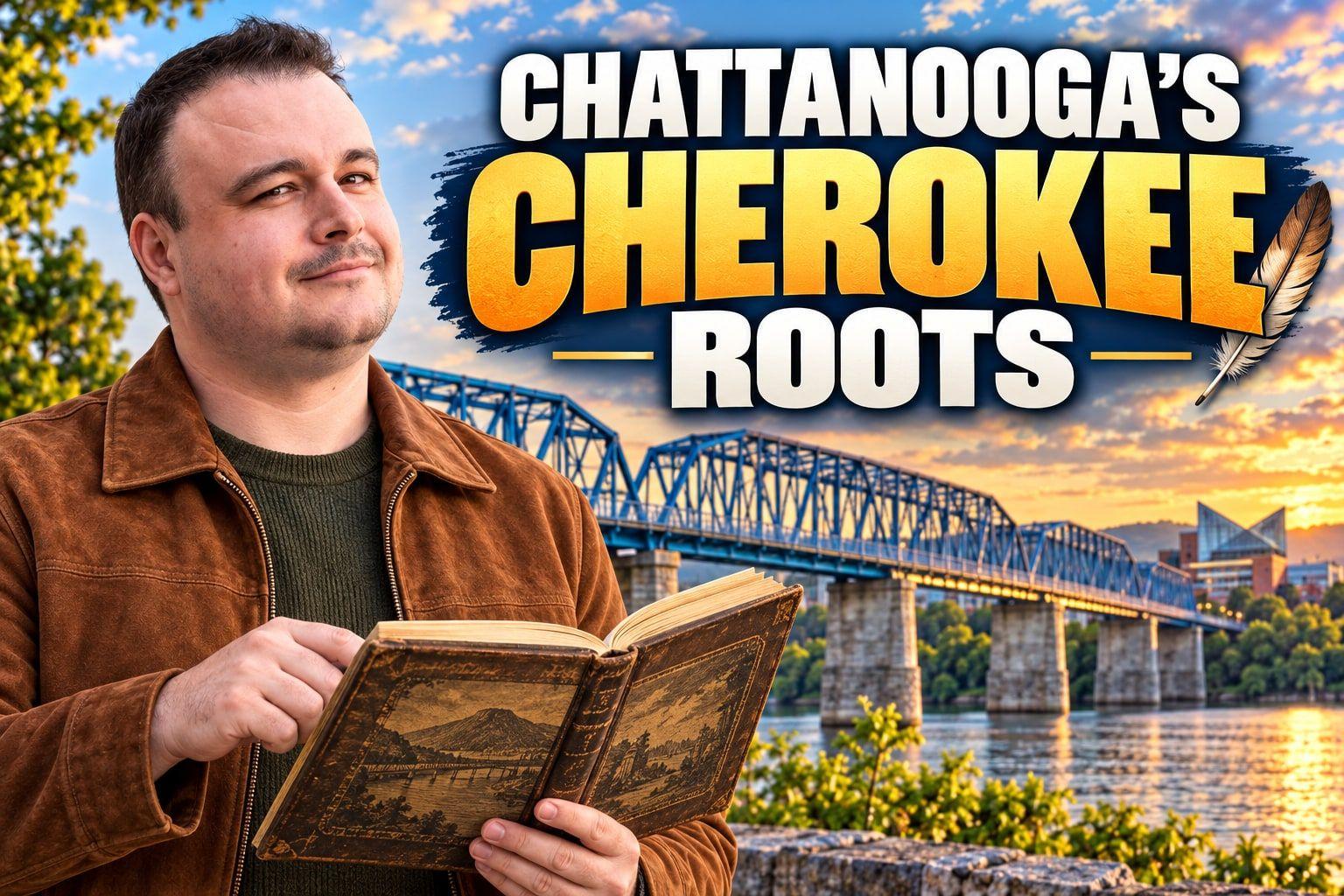
How Chattanooga Got Its Name: The Cherokee Word Behind the City
Before Chattanooga became a city, a railroad center, or a Civil War battlefield, the Tennessee River Valley was home to Indigenous communities whose place names reflected a much older history.
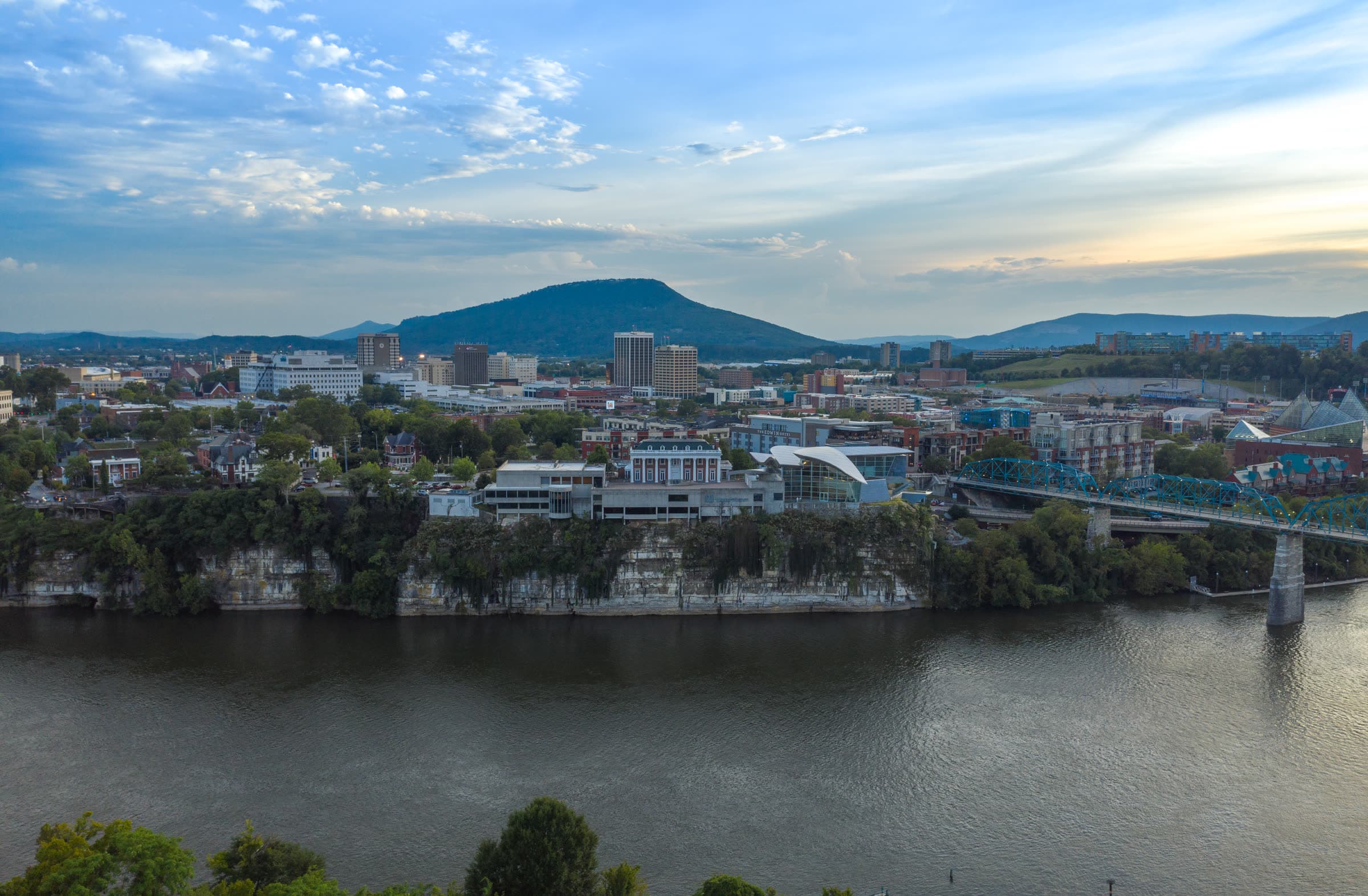
One of those names eventually became Chattanooga. Its origins have been debated by historians, but a widely repeated interpretation connects it to Lookout Mountain, the landmark that still defines the city's southwestern skyline.
How Chattanooga got its name is a story about language, geography, and the people who lived in this region long before the city was incorporated.
Where the Name Comes From
The name Chattanooga is commonly associated with an Indigenous expression meaning "rock coming to a point," a description traditionally linked to Lookout Mountain.
According to the National Park Service, the Creek expression *Chado-na-ugsa* referred to the mountain's distinctive shape. The landmark was familiar to generations of Creek and Cherokee people who traveled, hunted, and lived throughout the Tennessee River Valley.
The Cherokee also used a form of the name recorded as *Tsatanu'gi*. However, its precise linguistic origin is less certain than some popular explanations suggest.
In his 1900 study *Myths of the Cherokee*, ethnographer James Mooney documented Cherokee speakers who said the name was not originally a Cherokee word. Some of his informants believed it might have come from another Indigenous language, possibly Chickasaw.
Historical interpretations therefore differ. While the "rock coming to a point" explanation remains widely used by the National Park Service and local historical sources, it should not be treated as a universally established Cherokee translation.
What is clear is that the name existed before Chattanooga became an incorporated American city.
Ross's Landing and the City That Replaced It
In the early 1800s, a trading settlement developed along the Tennessee River at the site of present-day downtown Chattanooga.
The area became known as Ross's Landing, associated with the Ross family, including Daniel Ross and his son John Ross, who later served as Principal Chief of the Cherokee Nation.
The National Park Service credits Daniel Ross with establishing a trading post in the area and John Ross with expanding the business.
The nearby Brainerd Mission opened in 1817 and became an important institution in the region's Cherokee history, particularly through its educational and religious activities.
During this period, the Tennessee River served as a transportation and trading route connecting communities across the region.
The history of Ross's Landing changed dramatically during the forced removal of Cherokee people from their homelands.
In 1838, the area became associated with the Trail of Tears, when Cherokee people were forced westward under federal Indian removal policies. Ross's Landing was among the locations connected to that removal.
That same year, the settlement's name changed from Ross's Landing to Chattanooga.
The community was officially incorporated in 1839.
The name change came during a period of major political and demographic transformation, as white settlement expanded following Cherokee removal and the town developed into a regional commercial center.
Why the Name Outlasted the People Who Coined It
Chattanooga's name survived a profound transformation of the region, but the precise reasons settlers selected it are not fully established.
By the time the settlement was renamed in 1838, versions of the Indigenous place name were already associated with the surrounding landscape.
Lookout Mountain remains central to the traditional explanation. Its distinctive profile is one of the area's most recognizable geographic features, and historical accounts have long connected the mountain to the name Chattanooga.
However, researchers have documented competing interpretations.
In *Myths of the Cherokee*, James Mooney recorded that Cherokee speakers pronounced the name *Tsatanu'gi* but did not identify it as a word from their own language. His account also associated the name with a location along Chattanooga Creek.
This differs from the familiar Creek-language interpretation presented in National Park Service materials.
Rather than establishing a single unquestioned translation, these accounts show how Indigenous place names could pass between communities and languages before being adapted into English.
The name also carries a history that should not be overlooked. The Cherokee people were forcibly removed from much of their southeastern homeland, but the Cherokee Nation continued to exist and maintains its government, language, and cultural traditions today.
Chattanooga's name remains one visible connection to the Indigenous history of the Tennessee River Valley.
Why It Still Matters Today
For residents and visitors, Chattanooga is a familiar name. Its origins, however, offer a reminder that the city's history extends far beyond its incorporation in 1839.
The Tennessee River and Lookout Mountain shaped the region's geography, transportation, settlement patterns, and later economic development.
The same landscape that supported Indigenous communities became central to Chattanooga's growth as a river port, railroad center, and Civil War transportation hub.
Understanding the history behind the name adds context to familiar places such as Lookout Mountain, Ross's Landing, and the downtown riverfront.
For buyers and longtime residents alike, learning about Chattanooga's past offers a deeper understanding of the community and the landscape around it.
The city's name predates the modern municipality, even though its exact linguistic origin remains a subject of historical interpretation.
Our team at Choice Homes serves buyers and sellers across Chattanooga and the surrounding Tennessee and North Georgia communities. If you have questions about the area or want to talk through the market, reach us at (423) 618-3739.
For more on the communities we serve, visit our communities page.
---
Frequently Asked Questions
What does the name Chattanooga mean?
Chattanooga is commonly interpreted as meaning "rock coming to a point," traditionally referring to Lookout Mountain.
The National Park Service associates this explanation with the Creek expression *Chado-na-ugsa*.
However, historical research records other interpretations. Cherokee speakers used a form written as *Tsatanu'gi*, but ethnographer James Mooney documented accounts indicating that the word was not originally Cherokee.
The exact linguistic origin remains uncertain.
Who named Chattanooga?
The name has Indigenous origins, although the specific language and original meaning are debated.
The settlement previously known as Ross's Landing adopted the name Chattanooga in 1838, during a period of expanding white settlement and the forced removal of Cherokee people.
The name was already associated with the surrounding region before the town adopted it.
Chattanooga was officially incorporated in 1839.
What was Chattanooga called before it got its current name?
Before adopting the name Chattanooga, the settlement was known as Ross's Landing.
The name was associated with the Ross family, including Daniel Ross and his son John Ross, who later became Principal Chief of the Cherokee Nation.
The trading settlement developed along the Tennessee River in the early nineteenth century.
In 1838, the settlement was renamed Chattanooga, and it was incorporated the following year.
Sources
• National Park Service — Chattanooga, Tennessee: Train Town
• City of Chattanooga — Our History
• Visit Chattanooga — Chattanooga History
• James Mooney — Myths of the Cherokee (1900)
• Cherokee Nation — Official Website
Related reading
• 13 Homebuying Mistakes That Can Haunt You (And How to Avoid Them in Chattanooga)
• Local Bakeries Worth Visiting in Chattanooga This Holiday Season
• The Best Hiking Trails, Nature Preserves, and Scenic Walks Near Chattanooga
Homes for Sale
Live listings, updated directly from the MLS.
Ready to Make Your Next Move?
Connect with Choice Homes for a clear plan whether you are buying, selling, or exploring communities across Tennessee and Georgia.